
 HILTI
IN STOCK
Product video
 HILTI
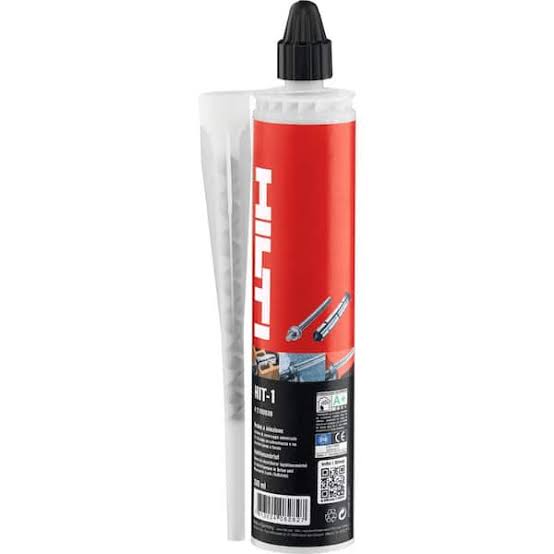
HIT-1 Adhesive Anchor 300ml
HILTI HIT-1 ADHESIVE ANCHOR 300ML – CHEMICAL ANCHOR PRICE IN KENYA
Price: KSh 3,500 per 300ml cartridge – Inclusive of VAT
Brand: Hilti
Product: HIT-1 Adhesive Anchor
Product type: Two-component hybrid injection mortar
Packaging: 300ml cartridge
Included accessory: Static mixing nozzle
Applications: Chemical anchoring in non-cracked concrete and specified solid and hollow masonry
Supplier: Startcore Ventures Limited, Nairobi, Kenya
1. Product Overview – What Is Hilti HIT-1 Adhesive Anchor?
Hilti HIT-1 is a two-component hybrid injection mortar developed for chemical anchoring applications in construction, installation and building maintenance. It is designed to bond suitable threaded rods and fastening elements into drilled holes in non-cracked concrete and specified solid or hollow masonry.
Available from Startcore Ventures Limited at KSh 3,500 inclusive of VAT per 300ml cartridge, Hilti HIT-1 is an anchoring solution for contractors, installers, fabricators, maintenance teams and construction professionals who require a chemical fixing system for light- and medium-duty applications.
Unlike a conventional mechanical expansion anchor, which holds by applying expansion pressure against the surrounding base material, a chemical anchor uses an adhesive mortar injected into a prepared hole. The threaded rod or approved fastening element is inserted into the mortar, and the material cures to form a bonded fixing.
This approach is useful for selected installations where a bonded anchoring method is specified, including fixing brackets, gates, window grills, railings, bathroom fittings, wall cabinets, lighting and air-conditioning supports.
Hilti HIT-1 is supplied in a 300ml cartridge containing two components. The components are combined through a static mixing nozzle during dispensing. The mixer helps produce a consistently mixed material before it is injected into the prepared hole.
The product is designed for convenient handling and can be used with standard dispensers and caulking guns. Hilti also identifies it as suitable for occasional use where a specialised dispenser may not be necessary.
One important advantage is its relatively rapid curing behaviour, although the actual working and curing times depend on the base material temperature. Installers must observe the manufacturer's working-time and curing-time tables before positioning or loading an anchor.
HIT-1 is suitable for specified applications in non-cracked concrete and selected solid and hollow masonry. It should not be marketed as a universal heavy-duty structural anchoring resin or as an approved solution for cracked concrete. The fastening design, substrate, anchor size, embedment depth, edge distance and spacing must all be considered before installation.
For contractors working on concrete and masonry installations in Kenya, Hilti HIT-1 provides a practical injection-mortar option where the application falls within the product's technical approvals and installation requirements.
2. Key Features of Hilti HIT-1
Two-Component Hybrid Injection Mortar
Hilti HIT-1 is a two-component hybrid mortar. The two components are mixed through the supplied static mixer during dispensing.
Correct mixing is essential. Before injecting the material into a drilled hole, dispense the initial material until the mixture is uniform, following the supplied instructions.
An improperly mixed adhesive should not be used for anchoring.
Styrene-Free Formulation
Hilti's Kenya product listing describes HIT-1 as a styrene-free adhesive mortar.
This is a useful product characteristic when comparing injection mortars. However, styrene-free does not mean harmless or suitable for handling without protection. Read the safety data sheet and wear the recommended protective equipment.
Rapid Curing
HIT-1 is designed for rapid curing. The actual curing time depends on the temperature of the base material.
For example, the supplied technical datasheet gives a minimum curing time of 45 minutes for dry concrete at a base material temperature of 20°C to below 30°C. At lower temperatures, curing takes longer.
Wet concrete requires additional curing time under the datasheet's instructions.
Suitable for Overhead Fastenings
The technical datasheet identifies HIT-1 as suitable for overhead fastening applications.
Overhead installations require particular care because the adhesive must be injected and the fastening element positioned correctly without compromising the installation.
The specified injection method, working time and curing time must be followed. The installer should also use the appropriate installation equipment and safety precautions.
Suitable for Non-Cracked Concrete
HIT-1 has technical information for anchoring in non-cracked concrete.
It is important to distinguish non-cracked concrete from cracked concrete. The supplied datasheet does not provide a basis for claiming that HIT-1 is approved for cracked concrete.
Where cracked concrete is involved, the engineer or installer must select an anchoring system with the appropriate approval for that condition.
Suitable for Specified Solid and Hollow Masonry
The supplied datasheet covers applications in solid and hollow clay bricks.
For hollow-brick installations, the HIT-SC sieve sleeve is used in the specified configurations. The sleeve helps contain the injection mortar within the hollow masonry and provides the appropriate arrangement for installing the threaded rod.
Do not assume that the product is approved for every hollow block, brick or masonry type. The datasheet identifies specific masonry conditions and recommends site testing for other materials or installation conditions.
Small Edge Distance and Anchor Spacing
Hilti identifies small edge distances and anchor spacing among the product's features.
However, minimum distances are still required. The actual permissible spacing and edge distance depend on the anchor diameter, embedment, base material and design conditions.
The installer must follow the relevant technical tables rather than assuming that anchors can be installed anywhere near an edge.
Standard Dispensers and Convenient Handling
The 300ml cartridge is designed to fit standard dispensers and caulking guns. The supplied mixer helps simplify the application process.
This makes the product practical for contractors who undertake occasional or regular chemical anchoring work.
3. Applications of Hilti HIT-1 in Construction
Hilti HIT-1 is intended for light- and medium-duty fastening applications. The following are examples of installations that may be suitable, provided the substrate, loads and fastening design comply with the product's technical requirements.
A. Fence Posts, Gates and Railings
Metal gates, fence posts and railing systems often need to be fixed to existing concrete or suitable masonry.
Chemical anchoring can provide a bonded fixing for threaded rods used to secure brackets and base plates.
HIT-1 may be considered for suitable light- and medium-duty installations where the concrete is non-cracked or the masonry is one of the specified types.
The fixing design must account for the weight of the installation, expected forces, anchor spacing, edge distances and substrate condition.
B. Window Grills and Security Fixtures
Window grills and security fittings are commonly installed into concrete and masonry walls.
HIT-1 can be considered for appropriate threaded-rod fastening applications where the base material and fixing arrangement meet the manufacturer's requirements.
The installer should ensure that the drilled hole is correctly sized and thoroughly cleaned before injecting the mortar.
C. Air-Conditioning Supports
Air-conditioning installations frequently require brackets and supports to be fixed to walls or other building structures.
Where a chemical anchoring system is specified, HIT-1 may be suitable for selected light- and medium-duty fastening applications.
The fixing design must consider the weight of the equipment, bracket geometry, vibration, substrate and applicable safety requirements. Do not use a generic anchor recommendation in place of an engineered fixing design for equipment where failure could cause injury or property damage.
D. Bathroom Fittings and Wall Cabinets
Bathroom fittings, wall-mounted cabinets and selected fixtures may require secure anchoring into concrete or suitable masonry.
HIT-1 can be considered for compatible installations using the appropriate threaded rods and fastening arrangement.
For wet-area installations, the installer should also consider corrosion resistance of the metal fastening components and the condition of the surrounding substrate.
E. Lighting and Electrical Fixtures
Lighting brackets, selected electrical supports and other light-duty building fixtures may require bonded anchors.
HIT-1 can be used where the fastening arrangement falls within the product's approved application range.
The anchor size, embedment and substrate must be checked before installation.
F. Mechanical and Building Services Supports
Building services installations may require fixing pipe brackets, service supports and other equipment to existing concrete or masonry.
Chemical anchors are useful in retrofit work because they allow a fixing to be installed into an existing substrate without casting a new concrete section.
HIT-1 may be considered for appropriate light- and medium-duty installations. Higher-load or safety-critical supports require a separately specified anchoring system and engineering assessment.
G. Selected Masonry Fastening Applications
HIT-1's masonry technical information covers specified solid and hollow clay bricks.
For hollow-brick installations, the correct HIT-SC sieve sleeve must be used where required by the installation table.
Because masonry varies considerably in strength, density, geometry and condition, the product should not be assumed suitable for every brick or block. Hilti's datasheet calls for site testing where the base material or setting conditions fall outside the listed configurations.
4. Technical Specifications of Hilti HIT-1
The following details are based on the supplied Hilti HIT-1 technical datasheet, updated January 2023, and Hilti's Kenya product listing.
Specification - Product information
Brand | Hilti
Product name | HIT-1 Adhesive Anchor
Product type | Two-component hybrid injection mortar
Cartridge size | 300ml
Product formulation | Styrene-free, according to Hilti Kenya listing
Mixer | Static mixing nozzle included
Concrete application | Non-cracked concrete
Masonry application | Specified solid and hollow clay bricks
Concrete drilling method | Hammer drilling
Masonry drilling method | Hammer mode for solid bricks; rotary mode for hollow bricks
Installation temperature – concrete | -5°C to +40°C
Installation temperature – masonry | 0°C to +40°C
Concrete anchor sizes in datasheet | M8, M10, M12 and M16
Masonry anchor sizes in datasheet | M8, M10 and M12
Concrete approval | ETA-17/0005
Storage and transportation temperature | 5°C to 25°C
Shelf life | 12 months from manufacture, under stated conditions
Price at Startcore | KSh 3,500 incl. VAT
Concrete Anchor Installation Dimensions
The supplied datasheet provides the following nominal drill-bit diameters and permitted embedment ranges for the listed anchor sizes.
Anchor size Drill-bit diameter - Minimum embedment - Maximum embedment
M8 | 10mm | 60mm | 160mm
M10 | 12mm | 60mm | 200mm
M12 | 14mm | 70mm | 240mm
M16 | 18mm | 80mm | 320mm
These dimensions are product installation parameters, not a recommendation to use the maximum embedment in every project. The design must account for the base material, anchor load, concrete thickness, edge distance and spacing.
Minimum Edge Distance and Spacing in Concrete
The datasheet provides the following minimum values:
Anchor size - Minimum spacing -Minimum edge distance
M8 | 40mm | 40mm
M10 | 50mm | 50mm
M12 | 60mm | 60mm
M16 | 80mm | 80mm
These are minimum setting details. The actual design may require greater distances depending on the fastening arrangement and loading conditions.
Temperature and Curing Time
HIT-1's working time and curing time change according to base material temperature.
The following table is taken from the supplied datasheet for dry concrete:
Base material temperature -Maximum working time - Minimum curing time
-5°C to below 0°C | 1 hour 30 minutes | 6 hours
0°C to below 5°C | 45 minutes | 3 hours
5°C to below 10°C | 25 minutes | 2 hours
10°C to below 15°C | 20 minutes | 100 minutes
15°C to below 20°C | 15 minutes | 80 minutes
20°C to below 30°C | 6 minutes | 45 minutes
30°C to below 34°C | 4 minutes | 25 minutes
35°C to 40°C | 2 minutes | 20 minutes
Important: The datasheet states that curing times for wet concrete must be doubled. The table must not be used as a substitute for the complete product instructions. Observe the correct time for the actual base material temperature and installation condition.
5. Hilti HIT-1 Installation Guide
Correct installation is essential to the performance of a chemical anchor. Even a suitable adhesive mortar can produce an unreliable fixing if the drilled hole is incorrectly sized, inadequately cleaned or loaded before curing.
The following is a practical overview of the installation sequence in the supplied datasheet. The package instructions and manufacturer's current technical documentation take precedence.
Step 1: Confirm the Application
Before drilling, confirm:
- Whether the base material is concrete or masonry.
- Whether concrete is non-cracked.
- Whether the masonry is a specified solid or hollow brick.
- The required threaded-rod diameter.
- The required embedment depth.
- The design load and fastening arrangement.
- The required edge distance and anchor spacing.
- The installation temperature.
For structural or safety-critical fixings, the anchor must be selected and designed by a competent professional.
Step 2: Drill the Hole
For concrete, the datasheet specifies hammer drilling with the correct drill-bit diameter.
For solid masonry, use hammer drilling as specified.
For hollow bricks, the datasheet specifies rotary drilling rather than hammer mode.
Use the drill diameter and hole depth specified for the anchor size and installation configuration. Do not estimate hole dimensions.
A suitable rotary hammer can improve drilling efficiency and accuracy when the correct drill bit is used.
Step 3: Clean the Hole Thoroughly
Hole cleaning is one of the most important stages of chemical anchoring.
Drilling leaves dust and loose particles inside the hole. If these remain, the adhesive may bond to the dust instead of the base material.
Hilti's installation instructions identify manual cleaning with machine brushing for specified hole sizes and depths, and compressed-air cleaning with machine brushing for the relevant deeper-hole applications.
Use the specified brush diameter and cleaning equipment.
Do not skip cleaning cycles or assume that injecting more resin will compensate for a dusty hole.
Step 4: Prepare the Cartridge
Check the cartridge and nozzle before dispensing.
Attach the static mixing nozzle and prepare the injection system according to the package instructions.
Dispense the initial material until a uniform mixture is obtained. Do not use material that has not been properly mixed.
Follow the safety instructions and wear protective gloves and suitable protective goggles.
Step 5: Inject the Mortar
Insert the nozzle into the drilled hole as instructed.
Inject the material from the appropriate position, withdrawing the nozzle progressively to avoid trapping air.
For the concrete installation method, the datasheet illustrates filling the drilled hole to approximately two-thirds full before inserting the fastening element.
Overhead applications and installations with embedment depths greater than 250mm require the appropriate injection method and accessories specified by Hilti.
Step 6: Insert the Threaded Rod
Insert the threaded rod or approved fastening element while observing the maximum working time.
Position the element to the specified embedment depth.
Do not move or disturb the installed element while the adhesive is curing.
Step 7: Allow the Adhesive to Cure
Allow the material to cure for the minimum period specified for the base material temperature and moisture condition.
Do not apply the design load before the required curing time has elapsed.
For wet concrete, remember that the datasheet requires curing times to be doubled.
Step 8: Load the Anchor
Only load the anchor after the required curing time.
Apply the specified torque and fastening arrangement in accordance with the design and manufacturer's instructions.
For masonry installations, use the correct sleeve and follow the specific instructions for solid or hollow bricks.
6. Using Hilti HIT-1 in Solid and Hollow Masonry
HIT-1 has separate installation details for solid and hollow masonry.
This distinction matters because the internal structure of hollow bricks is different from that of solid bricks.
Solid Brick Installation
The datasheet includes M8, M10 and M12 threaded-rod configurations for specified solid clay bricks.
Depending on the configuration, installation may be carried out without a sieve sleeve or with the specified HIT-SC sleeve.
The correct drill diameter, hole depth and embedment depth must be followed.
Hollow Brick Installation
For hollow-brick installations, the HIT-SC sieve sleeve is used in the configurations shown in the datasheet.
The sleeve is inserted into the drilled hole before injection. The adhesive is dispensed into the sleeve according to the manufacturer's instructions, after which the threaded rod is installed.
Do not use a solid-brick installation procedure on hollow bricks without checking the relevant instructions.
Masonry Load Values
The datasheet provides recommended load information for specific brick types, anchor sizes, sleeve arrangements and installation conditions.
These values are not universal load ratings for all masonry.
Hilti specifically notes that the wide variety of bricks means site tests must be performed for applications outside the listed base materials or setting conditions.
7. Where Hilti HIT-1 Should Not Be Used Without Further Verification
Choosing the correct chemical anchor is as important as installing it correctly.
The supplied datasheet has a defined scope. Do not extend its technical claims beyond that scope.
Cracked Concrete
The concrete section of the datasheet identifies non-cracked concrete.
Do not specify HIT-1 for cracked concrete on the assumption that all chemical anchors have the same approval.
If cracked concrete is involved, select an anchor with the appropriate approval and technical documentation.
Unlisted Masonry Types
The masonry section covers specified solid and hollow clay bricks.
Do not automatically assume that the same performance applies to concrete blocks, weak masonry, lightweight blocks or other unlisted materials.
Site testing and technical assessment may be required.
Heavy Structural or Safety-Critical Fixings
Hilti's Kenya product listing positions HIT-1 for light- and medium-duty applications.
For heavy structural steel, critical machinery supports, major infrastructure connections or other high-load applications, do not select HIT-1 solely because it is a chemical anchor.
The project engineer must assess the design requirements and select a suitable approved system.
Incorrect Installation Conditions
Do not use the product outside its specified installation temperature range.
Do not ignore curing times, hole-cleaning requirements or the distinction between dry and wet concrete.
These conditions directly affect the installation process and the reliability of the fixing.
8. Hilti HIT-1 Compared With Other Chemical Anchors at Startcore
Startcore supplies several chemical anchoring products. They are not interchangeable simply because they are all supplied as injection mortars or chemical anchor cartridges.
Hilti HIT-1 vs Akfix C900
Akfix C900 is a polyester chemical anchor option for suitable anchoring applications.
Hilti HIT-1 is a two-component hybrid injection mortar with technical information for non-cracked concrete and specified masonry.
The correct choice depends on the product approval, base material, required load and installation conditions.
View Akfix C900 Chemical Anchor.
Hilti HIT-1 vs Akfix C920
Akfix C920 is another two-component injection mortar available from Startcore.
It provides an alternative product for contractors comparing chemical anchoring systems.
Do not assume that the load values, curing times or substrate approvals of C920 are the same as HIT-1. Review each product's technical documentation before substitution.
View Akfix C920 Chemical Anchor.
Hilti HIT-1 vs Sika AnchorFix-1
Sika AnchorFix-1 is a chemical anchor supplied in a 300ml cartridge.
It is a separate product with its own technical requirements and substrate limitations.
Compare the relevant product data sheets, installation procedures and approvals before deciding which product is appropriate.
View Sika AnchorFix-1 Chemical Anchor 300ml.
Hilti HIT-1 vs Struct-EP870
Struct-EP870 is a modified epoxy rebar bonding adhesive listed by Startcore.
Its formulation and intended application differ from Hilti HIT-1. It should not be treated as a direct substitute without reviewing the technical requirements of the specific job.
View Struct-EP870 Chemical Anchor Resin 360ml.
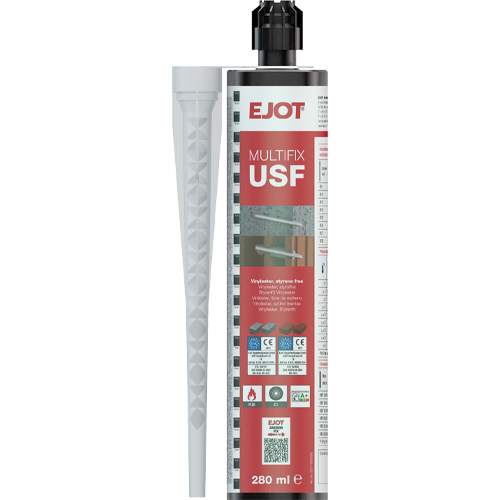
Hilti HIT-1 vs Multifix USF 420
Multifix USF 420 is a vinylester injection mortar with its own published application approvals.
It is another option for professional anchoring work where the relevant approval covers the project conditions.
For example, its product documentation identifies approved applications in cracked and non-cracked concrete, subject to the applicable ETA conditions. This is different from the non-cracked concrete scope in the supplied HIT-1 datasheet.
View Multifix USF 420 Vinylester Chemical Anchor.
9. Tools and Accessories for Chemical Anchor Installation
A chemical anchoring system requires more than the cartridge itself. The correct drilling, cleaning and installation equipment is important.
For contractors using Hilti HIT-1, the following tools may be required depending on the application:
- Rotary hammer suitable for the specified drilling method.
- Correct diameter masonry drill bit.
- Hole-cleaning brushes.
- Blow-out pump or suitable compressed-air equipment.
- Chemical anchor dispenser.
- Static mixing nozzle.
- HIT-SC sieve sleeve for specified hollow-brick installations.
- Approved threaded rods and fastening elements.
- Protective gloves and safety goggles.
For concrete drilling, consider the Bosch GBH 2-24 DRE Rotary Hammer.
The drill must be used with the correct bit and drilling mode for the base material. For hollow masonry, follow the specific rotary-drilling requirements in the Hilti instructions.
10. Storage and Handling
Correct storage helps preserve the product before use.
Hilti's Kenya product listing specifies:
- Storage and transportation temperature: 5°C to 25°C.
- Shelf life: 12 months from the date of manufacture at the stated storage conditions.
Always check the manufacturing date and expiry information on the cartridge before use.
Store the product in its original packaging, away from direct sunlight and unsuitable temperature conditions.
Do not use a damaged, expired or improperly stored cartridge.
Safety Precautions
The supplied datasheet instructs users to review the Material Safety Data Sheet before use.
Wear well-fitting protective goggles and protective gloves when handling the product.
Avoid unnecessary skin and eye contact. Follow the safety data sheet for handling, first aid, spill response and disposal requirements.
Keep the product away from children and unauthorised users.
11. Frequently Asked Questions About Hilti HIT-1
1. What is Hilti HIT-1 used for?
Hilti HIT-1 is a two-component hybrid injection mortar used for chemical anchoring in non-cracked concrete and specified solid and hollow masonry.
2. What is the price of Hilti HIT-1 in Kenya?
Startcore Ventures Limited offers Hilti HIT-1 at KSh 3,500 inclusive of VAT per 300ml cartridge.
3. What size cartridge is Hilti HIT-1?
The product is supplied in a 300ml cartridge.
4. Does Hilti HIT-1 come with a mixing nozzle?
Hilti's Kenya product listing identifies a mixer as included with the product.
5. Can Hilti HIT-1 be used in concrete?
Yes. The supplied technical datasheet covers anchoring in non-cracked concrete using the specified threaded rods, drill sizes, embedment depths and installation procedures.
6. Can Hilti HIT-1 be used in cracked concrete?
The supplied datasheet identifies the concrete application as non-cracked concrete. Do not specify it for cracked concrete unless the applicable manufacturer documentation expressly approves the proposed application.
7. Can Hilti HIT-1 be used in hollow bricks?
Yes, for the specified hollow-brick configurations using the appropriate HIT-SC sieve sleeve and installation procedure.
8. Can Hilti HIT-1 be used in solid bricks?
Yes. The supplied datasheet includes specified solid clay brick applications.
9. What is the installation temperature range?
For the concrete application, the supplied datasheet specifies -5°C to +40°C. For the masonry application, it specifies 0°C to +40°C.
10. How long does Hilti HIT-1 take to cure?
Curing time depends on the base material temperature and moisture condition.
For dry concrete at 20°C to below 30°C, the datasheet gives a minimum curing time of 45 minutes. At lower temperatures, the curing time increases. For wet concrete, the curing times must be doubled.
11. Can Hilti HIT-1 be used for overhead fastening?
Yes. The datasheet identifies overhead fastening as an application. Follow the specified injection procedure and observe the working time.
12. Does Hilti HIT-1 require a special dispenser?
Hilti's Kenya listing states that the cartridges fit standard dispensers and caulking guns and can also be suitable for occasional use without a special dispenser.
The correct dispenser must still be able to dispense the cartridge properly.
13. Why is hole cleaning important?
Dust and drilling debris can interfere with the bond between the adhesive and the base material. Follow the manufacturer's cleaning method using the correct brush and blow-out equipment.
14. Can the anchor be loaded immediately after installation?
No. The anchor must remain undisturbed until the required curing time has elapsed. Loading it too early can compromise the fixing.
15. How should Hilti HIT-1 be stored?
Hilti's Kenya listing specifies a storage and transportation temperature range of 5°C to 25°C and a shelf life of 12 months under the stated conditions. Check the cartridge's manufacturing and expiry details before use.
16. Is Hilti HIT-1 suitable for heavy structural steel connections?
Do not assume so. The Kenya listing positions the product for light- and medium-duty applications. Heavy structural connections require a separately specified anchoring system and engineering assessment.
17. What is the difference between Hilti HIT-1 and other chemical anchors?
Chemical anchors differ in resin formulation, approvals, substrate suitability, load performance, installation conditions and curing times. Compare the individual technical datasheets rather than treating all injection mortars as equivalent.
12. Related Construction Resources
For more information on chemical anchoring, product selection and construction procurement, read these Startcore Resource Centre articles:
Chemical Anchors in Kenya – Complete Guide to Anchor Resin and Concrete Fixings
Learn about chemical anchor types, resin technologies, threaded rods, installation procedures, hole cleaning and selecting the right anchor for different applications.
Read: Chemical Anchors in Kenya – Complete Guide
Complete Construction Site Setup Checklist for Kenyan Contractors
Explore the tools, construction chemicals, fastening systems, safety equipment and materials that contractors should consider when planning a construction site.
Read: Complete Construction Site Setup Checklist Kenya 2026
13. Buy Hilti HIT-1 Adhesive Anchor 300ml in Kenya from Startcore Ventures Limited
If you are looking for Hilti HIT-1 adhesive anchor in Kenya, Startcore Ventures Limited offers the 300ml cartridge at:
KSh 3,500 Inclusive of VAT
Hilti HIT-1 is a practical injection-mortar option for suitable light- and medium-duty chemical anchoring applications in non-cracked concrete and specified solid and hollow masonry.
Whether you are installing gates, window grills, brackets, railings, bathroom fittings, lighting supports or selected building-service fixtures, ensure that the base material and fixing arrangement comply with the manufacturer's technical requirements.
Startcore Ventures Limited supplies construction chemicals, adhesives, sealants, power tools, PPE and industrial products to contractors, engineers, fabricators, hardware retailers and project procurement teams.
Why Order from Startcore?
- Construction chemicals and professional fixing products from recognised brands.
- Technical product information to help with product selection.
- A range of chemical anchors for different applications.
- Power tools and installation accessories available through one supplier.
- Support for contractor and project procurement requirements.
Contact Startcore Ventures Limited
Product: Hilti HIT-1 Adhesive Anchor 300ml
Price: KSh 3,500 inclusive of VAT
Sales and WhatsApp: +254 705 544 817
Office: +254 737 636 611
Email: [email protected]
Website: www.startcore.co.ke
Location: Bhavesh Centre, Mezzanine Floor, Office M1C, Ngara Road, Nairobi, Kenya.
Request a Quote or Order Today
Need Hilti HIT-1 for a construction or installation project?
Contact Startcore with your required quantity, anchor size, base material and project location. Our team can help you identify the relevant product information and complementary installation equipment.
Order Hilti HIT-1 300ml today at KSh 3,500 inclusive of VAT from Startcore Ventures Limited – your construction products and technical procurement partner in Kenya.